

Due Diligence Questionnaire Meaning?
A due diligence questionnaire is a set of structured questions used by businesses to evaluate another organization’s risks, compliance issues, financial health, and operational practices. It is often used during mergers, acquisitions, vendor onboarding, or investment decisions. By filling out a due diligence questionnaire, a company shares key information that helps assess its stability, security, and reliability.
Due diligence questionnaire meaning can vary slightly depending on the industry or specific situation, but the central idea is always the same: to collect critical information that helps stakeholders make informed decisions. This process is a standard part of business assessments and ensures that all parties involved have a clear understanding of the risks and benefits associated with a potential deal. Regulatory bodies like the U.S. Securities and Exchange Commission also emphasize due diligence as a critical step in evaluating investments and protecting stakeholders.
Why Do You Need a Due Diligence Questionnaire?
A due diligence questionnaire provides transparency between two organizations. It helps assess the financial and operational health of a business before entering into a partnership, investment, or acquisition. By completing a due diligence questionnaire, both parties can be confident that they are aware of each other’s risks, compliance, and business operations, allowing for informed decision-making.
When Should a Due Diligence Questionnaire Be Used?
A due diligence questionnaire can be used in various scenarios:
-
Mergers and Acquisitions (M&A):
When one company is looking to acquire or merge with another, a DDQ is an essential tool to gather necessary information about the other company’s operations, finances, and risks.
-
Investor Due Diligence:
Investors use DDQs to evaluate the financial health, stability, and growth potential of companies they wish to invest in. It helps them assess whether the investment aligns with their risk tolerance and goals.
-
Vendor Onboarding:
Companies may use DDQs to evaluate potential vendors or third-party partners to ensure that they meet compliance standards, have the right security measures in place, and can be trusted to deliver goods and services as expected.
-
Regulatory Requirements:
Certain industries require businesses to undergo due diligence processes to ensure compliance with regulations. A due diligence questionnaire can be a part of this process, ensuring all necessary regulatory requirements are met.
How to Conduct Due Diligence Using a Questionnaire?
The process of conducting due diligence with a due diligence questionnaire involves several key steps. Here’s a breakdown of how to perform it effectively:
Step 1: Define the Objectives
Before creating a due diligence questionnaire, it’s crucial to understand what you need to achieve. Are you conducting due diligence for an acquisition? Are you assessing a potential vendor? The objective will determine the areas of focus and the types of questions included in the questionnaire.
Step 2: Customize the Questionnaire
A due diligence questionnaire can be generic or tailored to specific industries. For example, a questionnaire for evaluating a tech company will focus more on IT infrastructure and intellectual property, while a questionnaire for a financial institution will emphasize compliance, financial stability, and risk management. Ensure the questions align with your objectives and the specific risks you aim to assess.
Step 3: Distribute the Questionnaire
Once the questionnaire is prepared, it should be distributed to the relevant parties for completion. This could be done via email, shared document platforms, or online survey tools. It’s essential to ensure that the parties involved are familiar with the due diligence process and understand how to respond accurately to the questions.
Step 4: Review Responses
Once the due diligence questionnaire is completed, it’s time to review the responses. Analyze each answer carefully, especially for areas that raise red flags or require further clarification. It’s important to scrutinize any inconsistencies or discrepancies that could indicate potential issues.
Step 5: Follow Up and Clarify
If there are any ambiguous or unclear responses, it’s important to follow up and request additional details. You may also need to request supporting documents or evidence to verify the claims made in the questionnaire.
Step 6: Decision Making
After thoroughly reviewing the due diligence questionnaire responses and confirming that all the necessary information is accurate, you can make an informed decision. Whether you’re moving forward with a merger, investment, or vendor relationship, the data from the questionnaire will provide a solid foundation for your decision-making process.
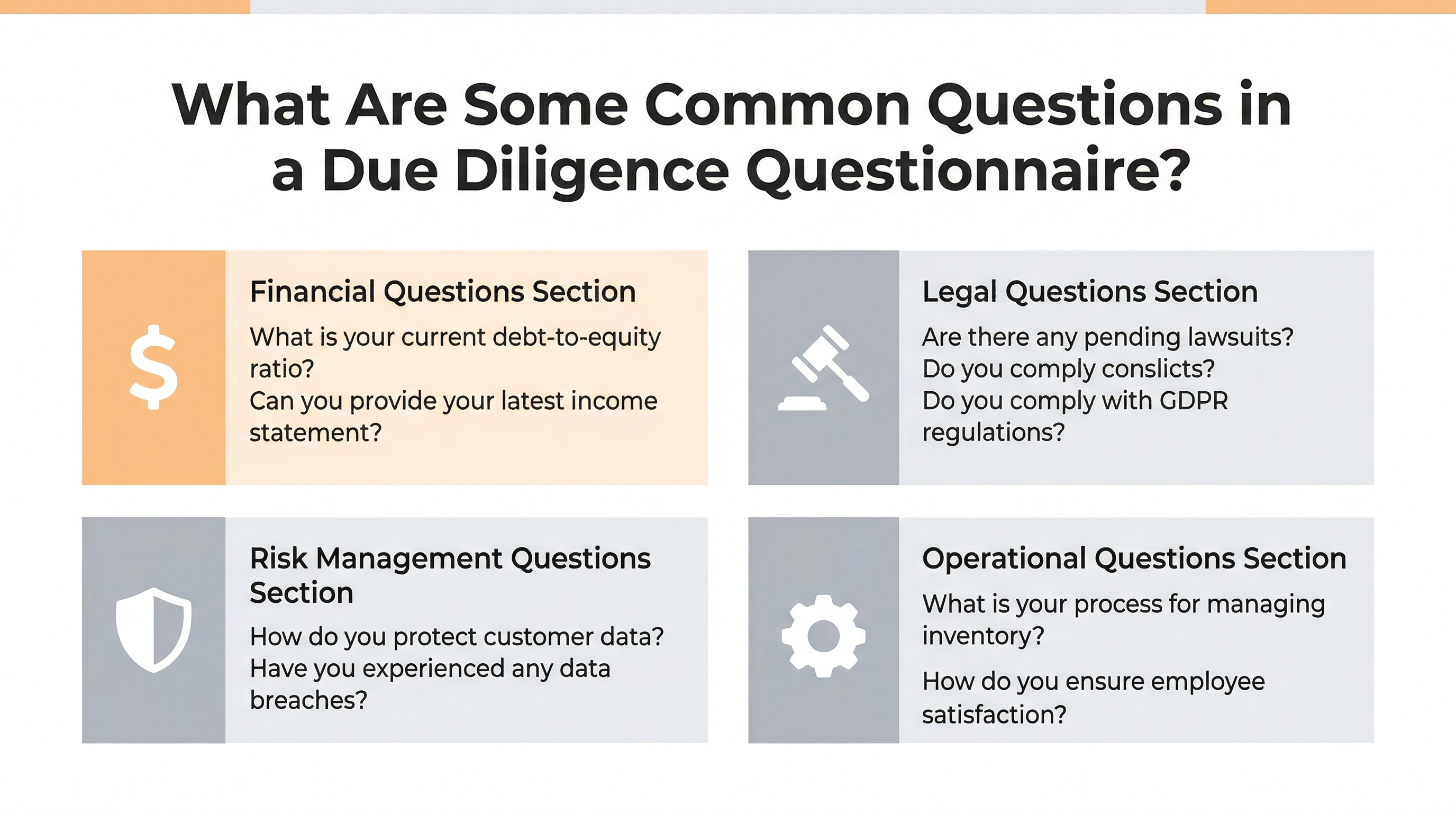
What Are Some Common Questions in a Due Diligence Questionnaire?
A due diligence questionnaire can include a wide range of questions depending on the focus. Here are some common examples:
- Financial Information:
- Provide your most recent balance sheet and income statement.
- Do you have any outstanding loans, debts, or liabilities? Please explain.
- What is your company’s revenue growth over the past three years?
- Legal Compliance:
- Are there any pending or potential lawsuits involving the company?
- Has the company ever been subject to regulatory investigations or sanctions?
- Does the company comply with GDPR, HIPAA, or other relevant laws?
- Security and Risk Management:
- What measures are in place to secure sensitive customer data?
- How does the company manage cyber security risks?
- Have there been any security breaches in the past year?
- Operational Practices:
- How are employees trained on company policies and regulations?
- What is the company’s approach to sustainability and environmental practices?
- How is your supply chain managed, and do you rely on any third-party vendors?
Conclusion: How Can a Due Diligence Questionnaire Help You Make Informed Business Decisions?
A due diligence questionnaire is a valuable tool that helps businesses assess the risks, compliance, and operational strengths of potential partners, vendors, or acquisitions. By understanding the due diligence questionnaire meaning and the process, you can ensure that you gather all the critical information necessary to make informed decisions.
Whether you’re an investor, business owner, or part of a compliance team, using a due diligence questionnaire is an essential step to mitigating risk and making confident business decisions. With careful review and strategic follow-ups, this process can uncover hidden issues and help guide your organization to more successful partnerships and investments.