Cybersecurity in Government vs. Private Sector: What You Need to Know

Manoj Adwani
Founder, Narad

Why Cybersecurity Matters for Everyone
In today’s connected world, cyberattacks can impact governments, businesses, and individuals alike. A recent breach in the UK Electoral Commission compromised the data of over 40 million voters, showing that no organization is completely safe.
Both sectors manage sensitive information. But how they protect it differs. Cybersecurity in government is more complex and high-stakes than in the private sector. From protecting citizen data to defending national infrastructure, public sector security operates under a very different set of challenges.
Let’s understand their difference, challenges, and strategies.
Same Threats, Very Different Cybersecurity Realities
Cyber threats do not distinguish between government agencies and private companies. Both face ransomware, phishing, data breaches, insider threats, supply-chain attacks, and increasingly sophisticated cybercriminals.
But the way they manage these risks can be very different.
For a government agency, a cyberattack can disrupt essential public services, expose sensitive citizen or national security information, or affect critical infrastructure. For a private company, the same attack may result in financial losses, operational downtime, regulatory penalties, intellectual property theft, and loss of customer trust.
The difference is not simply the type of threat. Government and private-sector organisations operate with different priorities, accountability structures, budgets, procurement processes, technology environments, and levels of risk tolerance. These factors influence everything from how quickly new security technologies are adopted to how incidents are reported and how third-party vendors are assessed.
At the same time, the line between public- and private-sector cybersecurity is becoming increasingly blurred. Governments depend on private technology providers, cloud platforms, contractors, and critical suppliers. Meanwhile, private organisations in banking, healthcare, energy, telecommunications, and technology often operate infrastructure and services that are essential to society.
Understanding these differences and the challenges both sectors increasingly share is essential for building a cybersecurity strategy that can respond to today’s evolving risk landscape.
Government vs. Private-Sector Cybersecurity: A Quick Comparison
| Area | Government Sector | Private Sector |
|---|---|---|
| Primary Priority | Protect public services, citizen data, national security, and critical infrastructure | Protect business operations, revenue, customer data, intellectual property, and brand trust |
| Threat Landscape | Nation-state actors, espionage, cyber warfare, disruption of essential services | Ransomware, cybercrime, fraud, data theft, and business disruption |
| Compliance & Governance | Government mandates, public-sector security frameworks, and strict accountability requirements | Industry regulations, contractual requirements, security frameworks, and customer expectations |
| Technology Environment | Often includes complex legacy systems alongside modern infrastructure | Typically faster adoption of cloud, SaaS, automation, and emerging technologies |
| Procurement | Longer, highly structured procurement and approval processes | Generally faster and more flexible technology purchasing decisions |
| Third-Party Risk | Contractors, technology providers, infrastructure partners, and government suppliers | SaaS vendors, cloud providers, payment processors, data processors, and outsourced services |
| Incident Impact | Public safety, national security, essential services, and citizen trust | Financial loss, operational disruption, regulatory penalties, and reputational damage |
These differences shape how each sector approaches cybersecurity—but they also reveal a growing area of common ground. Both government agencies and private organisations must now secure increasingly complex digital ecosystems that extend far beyond their own networks.
Cybersecurity in Government Organisations
Cybersecurity in government organisations is shaped by a responsibility that extends far beyond protecting data or avoiding financial loss. Government agencies manage sensitive citizen information, national security data, critical infrastructure, public services, and systems that millions of people may depend on every day. A successful cyberattack can therefore affect not only the organisation itself but also public safety, national security, and trust in government institutions.
A More Complex and Sophisticated Threat Landscape
Government organisations may be targeted by financially motivated cybercriminals, hacktivists, insider threats, organised groups, and sophisticated state-sponsored actors. While ransomware and data theft remain serious concerns, some attacks may have broader objectives, including espionage, intelligence gathering, disruption of essential services, or gaining long-term access to sensitive systems.
Resilience and Continuity of Public Services
This makes resilience and continuity central to government cybersecurity. An online service provided by a private company may sometimes be temporarily taken offline for maintenance or incident response. For government agencies responsible for healthcare, transportation, utilities, emergency services, or public administration, extended downtime may have much wider consequences.
Cybersecurity strategies must therefore consider not only how to prevent attacks but also how to maintain essential operations and recover effectively when incidents occur.
Strict Governance and Compliance Requirements
Government organisations tend to operate within highly structured governance and compliance environments. Security requirements may be defined through national cybersecurity policies, government-specific standards, procurement rules, data protection laws, and sector-specific regulations.
This can create strong accountability, but it can also make cybersecurity transformation more complex. Implementing a new security tool or replacing an existing system may require multiple approvals, procurement procedures, security reviews, and extensive documentation.
The Challenge of Securing Legacy Technology
Many government agencies operate large, interconnected systems that have evolved over decades. Replacing these systems is rarely as simple as migrating to a new platform.
Critical services must continue operating during modernisation, integrations may be complex, and older systems may support specialised functions that are difficult to replace. As a result, security teams often need to protect a combination of legacy infrastructure and modern cloud-based environments.
Managing Risk Across Government Vendors and Contractors
Third-party risk has also become a major cybersecurity concern. Government agencies increasingly rely on technology providers, cloud platforms, contractors, consultants, software vendors, and other external partners.
Each relationship can introduce new access points and dependencies. Effective cybersecurity therefore requires visibility beyond the organisation’s own network, including structured vendor due diligence, risk assessments, evidence collection, and ongoing oversight of critical third parties.
Ultimately, government cybersecurity is built around public responsibility, resilience, accountability, and long-term risk management. The challenge is to strengthen security while continuing to deliver essential services, modernise complex technology environments, and manage an expanding ecosystem of external partners.
How Private Companies Approach Cybersecurity
Private companies generally approach cybersecurity through the lens of business risk. While protecting systems and data remains fundamental, cybersecurity decisions are closely connected to operational continuity, revenue, customer trust, regulatory compliance, and the organisation’s ability to grow.
The exact approach varies significantly by industry and company size. A fast-growing SaaS company may prioritise cloud security, customer security reviews, and certifications such as SOC 2 or ISO 27001. A financial institution may place greater emphasis on regulatory compliance, fraud prevention, data protection, and third-party risk management. A large enterprise may need to secure thousands of employees, applications, devices, and vendors across multiple countries.
Faster Technology Adoption, but a Growing Attack Surface
Private companies are often able to adopt new technologies faster than government organisations. Cloud infrastructure, SaaS applications, AI tools, automation, and specialised cybersecurity platforms can be deployed relatively quickly when there is a clear business case.
However, faster technology adoption creates its own risks. As businesses add more cloud platforms, SaaS applications, APIs, contractors, and technology vendors, their attack surface expands. Security teams may struggle to maintain visibility into who has access to sensitive data, which third parties are critical to operations, and whether vendors continue to meet security requirements after onboarding.
Cybersecurity Investment Must Support Business Priorities
Cybersecurity investment in the private sector is heavily influenced by risk and return. Security leaders often need to demonstrate how an investment reduces the likelihood or impact of a breach, supports regulatory requirements, protects revenue, or enables the company to win business.
For B2B technology companies, strong security can directly influence sales. Enterprise customers increasingly conduct detailed security reviews and send Security Questionnaires, Due Diligence Questionnaires (DDQs), Vendor Risk Assessments (VRAs), and RFPs before entering into a relationship.
Security and GRC Are Becoming Increasingly Connected
Cybersecurity is increasingly interconnected with governance, risk, and compliance. Security teams are not only defending systems; they are also assessing vendors, collecting compliance evidence, responding to customer reviews, maintaining audit trails, and demonstrating the organisation’s security posture to external stakeholders.
As these responsibilities grow, organisations need structured processes that allow security and compliance teams to work together rather than manage risk through disconnected systems and manual workflows.
This shift reflects a broader change in how organisations approach cybersecurity. The NIST Cybersecurity Framework (CSF) 2.0 places greater emphasis on cybersecurity governance and helps organisations understand, assess, prioritise, and communicate cybersecurity risk. For private companies, this reinforces the need to treat cybersecurity not simply as an IT responsibility but as an organisation-wide risk management priority.
Third-Party Risk Is a Major Business Risk
Most modern businesses depend on cloud providers, payment processors, SaaS platforms, data processors, outsourced service providers, and other vendors. A security failure at one of these organisations can create operational, financial, regulatory, and reputational consequences for the company using its services.
As a result, organisations are moving towards more structured Third-Party Risk Management (TPRM) processes that include vendor tiering, risk assessments, due diligence, remediation, and ongoing monitoring.
Balancing Strong Security with Business Growth
Ultimately, private-sector cybersecurity is driven by the need to balance security with speed and business growth. Companies must protect their systems and customers without creating unnecessary friction.
The most effective cybersecurity programs, therefore, combine strong governance with automation, risk-based decision-making, and the ability to adapt as the business and threat landscape evolve.
Why Public and Private Sectors Should Work Together
- Governments can issue real-time threat alerts to businesses
- Companies can share innovations and proven tactics
- Groups like ISACs encourage threat intelligence sharing across industries
Final Thoughts: Cybersecurity Is a Shared Responsibility
Frequently Asked Questions
Which sector is more vulnerable to cyberattacks, government or private?
Can businesses learn from government security practices?
Are public-private cybersecurity partnerships common?
How is cybersecurity in government different from the private sector?
Cybersecurity in government is often driven by strict regulations, legacy systems, and national security concerns, while the private sector focuses more on business risk, speed, and innovation. Government systems also tend to face higher exposure due to the volume of sensitive data they handle.
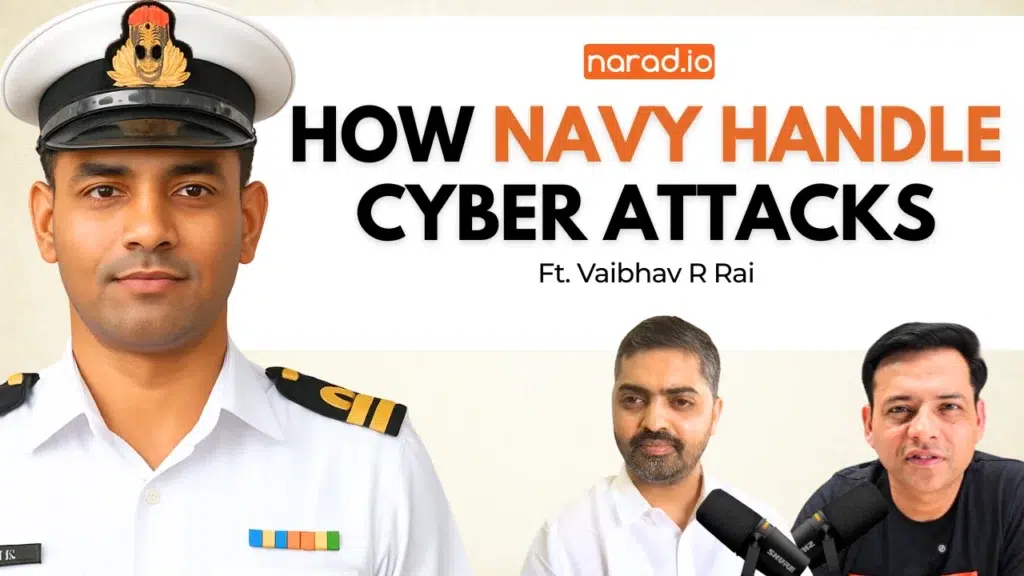
Related Podcast: Cybersecurity in the Public and Private Sector