
The Ultimate Guide to Vendor Risk Assessments (VRA)

Manoj Adwani
Founder, Narad
Almost every company today works with third-party vendors to help meet their operational needs. From suppliers and service providers to contractors and consultants, these relationships play a crucial role in the success of any business. However, with great partnerships come great risks. Vendor Risk Assessments (VRA) have become essential part of the process to ensure that third-party vendors meet the compliance, security, and operational standards required to protect your organization.
Vendor Risk Assessments (VRA) are key business tools that help you protect from any potential operational or reputational risks. In this ultimate guide, we will dive deep into Vendor Risk Assessment, its significance, and best practices for handling the VRA process effectively. We’ll also explore some common mistakes to avoid and how a well-managed VRA process can boost your business relationships.
What are Vendor Risk Assessments (VRA)?
The Consequences of a Poorly Handled VRA
A Vendor Risk Assessment is only valuable if it’s done thoroughly and consistently. Rushing the process, relying on incomplete information, or skipping assessments altogether can expose your organisation to risks that are difficult and expensive to fix later.
Here are some of the most common consequences.
- Security Risks Go Unnoticed: If a vendor’s security controls aren’t properly reviewed, vulnerabilities can go undetected. Weak access controls, missing certifications, poor incident response processes, or outdated infrastructure may only come to light after a security incident has already occurred.
- High-Risk Vendors Get Approved: Not every vendor carries the same level of risk. Without a structured assessment process, organisations may onboard vendors that don’t meet their security or compliance requirements, increasing the likelihood of future operational or cybersecurity issues.
- Compliance Gaps Increase: Many regulations require organisations to demonstrate that they perform due diligence on third-party vendors. Incomplete assessments, missing documentation, or inconsistent review processes can lead to audit findings, regulatory scrutiny, and unnecessary compliance risks.
- Business Operations Can Be Disrupted: Vendor risks aren’t limited to cybersecurity. Financial instability, poor business continuity planning, or operational failures at a critical supplier can interrupt essential services and impact day-to-day operations if these risks aren’t identified during the assessment process.
- More Time Is Spent Fixing Problems Later: Skipping a thorough assessment may seem faster initially, but organisations often spend significantly more time responding to incidents, requesting additional evidence, or managing remediation after a vendor has already been onboarded. Identifying risks early is almost always easier and less costly than fixing them later.
A structured Vendor Risk Assessment helps organisations identify potential issues before onboarding a vendor, prioritise risks based on their impact, and maintain a consistent, auditable process across every third-party relationship.
Stages of Vendor Risk Assessment Process
The Vendor Risk Assessments (VRA) are typically divided into five key stages, each playing an essential role in identifying, managing, and mitigating risk before and during a vendor relationship.
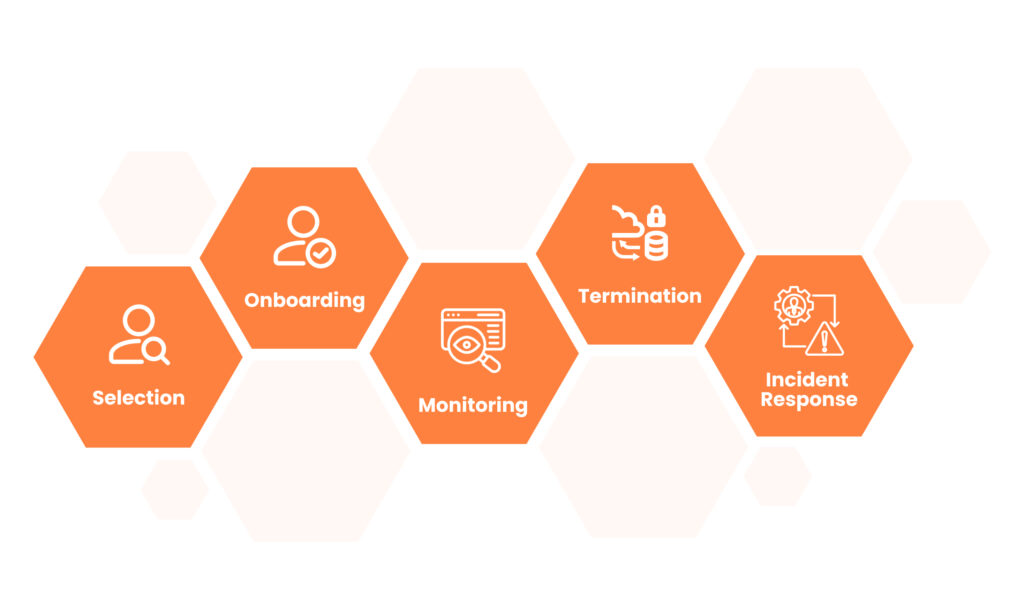
1. Selection – Identifying Low-Risk Vendors
2. Onboarding – Thoroughly Vetting Vendor Controls
Once a vendor is selected, the onboarding stage focuses on ensuring that their internal controls, security measures, and operational practices meet your organization’s standards. During this stage, vendors are required to provide detailed information about their business operations, including their information security policies, data protection measures, and compliance frameworks. This is typically done by having the vendor fill out a comprehensive questionnaire that outlines their procedures for protecting sensitive data, securing systems, and managing compliance risks. By completing this step, organizations can confirm that the vendor is fully prepared to meet the necessary requirements and reduce risks associated with the partnership.
Also read: How to perform Vendor Risk Assessments (VRA) with Automated Questionnaire.
3. Monitoring – Ongoing Evaluation of Vendor Performance
4. Termination – Safeguarding Data When Relationships End
5. Incident Response – Addressing Breaches or Disruptions
Narad's Role in Simplifying the VRA Process for Vendors
Vendor risk assessments (VRA) shouldn’t end with collecting a completed questionnaire. Security and compliance teams need to evaluate risks, review supporting evidence, identify control gaps, track remediation, and continuously monitor vendors throughout the relationship.
That’s exactly what Narad is built for.
Built by a compliance professional with over 20 years of experience, including working with global organisations like Barclays, Narad is an AI-powered Third-Party Risk Management (TPRM) platform designed to simplify the entire vendor risk management process. Today, Narad is trusted by organisations including Exotel, Cockroach Labs, VideoSDK, and other growing technology companies. Narad is also SOC 2 compliant, demonstrating the same commitment to security and compliance that it helps customers achieve.
With Narad, security and compliance teams can onboard vendors through a structured assessment process, collect and review security documentation, identify control gaps, assign risk scores, track remediation activities, and continuously monitor vendor risk from a single dashboard.
By bringing vendor risk assessments, TPRM, security questionnaires, due diligence, compliance evidence, and audit trails together in one platform, Narad helps organisations reduce manual effort, improve consistency, and build an audit-ready vendor risk management program that scales as the business grows.
Frequently Asked Questions
What are vendor risk assessments (VRAs)?
A Vendor Risk Assessment (VRA) is the process of evaluating a vendor’s security, compliance, operational, financial, and business risks before and during the vendor relationship. It helps organisations determine whether a vendor meets their risk management requirements before granting access to systems or sensitive information.
When should vendor risk assessments (VRA) be performed?
A vendor risk assessment should be completed before onboarding a new vendor. High-risk vendors should also be reassessed periodically or whenever there are significant changes to their services, security posture, or compliance status.
What should a vendor risk assessment include?
A comprehensive vendor risk assessment typically reviews information security controls, compliance certifications, data privacy practices, access management, business continuity, incident response, financial stability, and supporting evidence such as SOC 2 reports, ISO 27001 certificates, and security policies.
Who is responsible for conducting vendor risk assessments (VRA)?
Vendor risk assessments (VRA) are usually managed by security, compliance, procurement, or third-party risk management (TPRM) teams. Depending on the organisation, legal, IT, privacy, and business stakeholders may also participate in reviewing vendors before approval.
How can automation improve vendor risk assessments?
Automation helps organisations streamline vendor onboarding, distribute questionnaires, collect supporting evidence, standardise risk scoring, track remediation activities, and maintain complete audit trails. This reduces manual effort while improving consistency and visibility across the vendor assessment process.
Is Narad SOC 2 compliant?
Yes. Narad is SOC 2 compliant, demonstrating its commitment to maintaining strong security, availability, and operational controls. Built by a compliance professional with more than 20 years of experience and trusted by organisations such as Exotel, Cockroach Labs, and VideoSDK, Narad is designed to help security and compliance teams build scalable, audit-ready vendor risk assessment and TPRM programs.
Conclusion
A vendor risk assessment (VRA) is much more than a security questionnaire. It’s a structured process that helps organisations understand the risks associated with a vendor before they gain access to sensitive data, systems, or business operations.
As businesses work with more third-party vendors, managing these assessments manually becomes increasingly difficult. Security teams need to review documentation, evaluate risks, identify control gaps, track remediation, and maintain evidence for audits, all while keeping vendor onboarding moving.
A consistent vendor risk assessment (VRA) process helps organisations make better vendor decisions, reduce security and compliance risks, and build stronger relationships with trusted suppliers. As vendor ecosystems continue to grow, combining well-defined processes with automation allows security and compliance teams to scale efficiently without compromising on governance.
Platforms like Narad simplify the entire vendor risk assessment lifecycle, helping organisations assess vendors faster, maintain complete visibility into third-party risk, and stay audit-ready. If you are still managing your vendors on a spreadsheet, book a free demo of Narad today.